China Top Physical Therapy Equipment for Body Pain?

Time:2026-10-09 Author:Aria
0%

Body pain can limit sleep, movement, work, and simple daily routines. For many patients, suitable physical therapy equipment may support recovery when used with professional guidance. China has become an important source of rehabilitation devices, offering products for clinics, hospitals, fitness centers, and home users. Options may include therapeutic ultrasound machines, TENS units, infrared lamps, shockwave systems, traction beds, and electric muscle stimulators.

This guide examines China’s top physical therapy equipment for body pain through practical and clinical considerations. It focuses on treatment purpose, adjustment accuracy, safety features, material quality, certifications, and supplier support. A device should not be judged by price or appearance alone. A compact TENS unit may help with temporary comfort, while a shockwave system requires trained operation and careful patient screening. Professional assessment matters.

The term Physical Therapy Body Pain covers many conditions, from muscle tension to joint stiffness and sports-related injuries. No single machine works for everyone. That point is easy to overlook. Product claims can also sound stronger than the available evidence. Therefore, this review treats manufacturer information as a starting point, not final proof. Buyers should verify testing documents, warranty terms, training, and after-sales service before purchasing. Some comparisons may remain imperfect because specifications differ across suppliers. Still, clear evaluation can reduce mistakes and encourage safer decisions. A qualified therapist should determine whether a device suits the patient’s symptoms, medical history, and treatment plan.
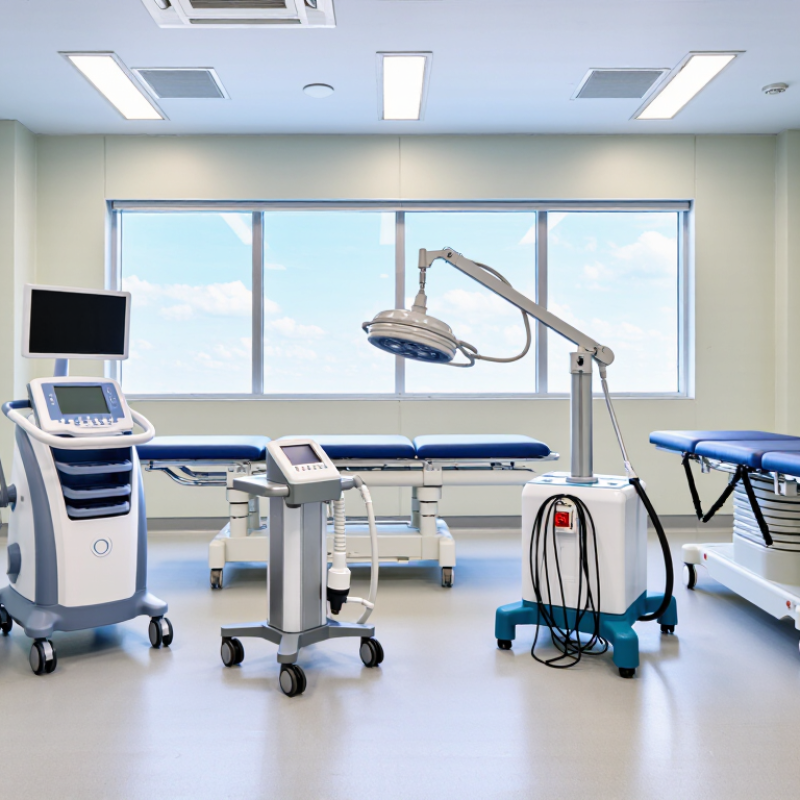
China Top Physical Therapy Equipment for Body Pain?

Global Pain Burden: 1.71 Billion People Live With Musculoskeletal Conditions

China Top Physical Therapy Equipment for Body Pain?

The global burden is enormous: about 1.71 billion people live with musculoskeletal conditions. Back pain, arthritis, and neck strain can change simple routines. A chair becomes uncomfortable. Stairs feel unexpectedly difficult. This burden also affects workplaces, families, and sleep quality. China’s physical therapy equipment market offers practical tools for clinics and home programs. Common options include therapeutic ultrasound, electrical stimulation, heat therapy, traction devices, and rehabilitation exercise systems. However, equipment should support assessment, not replace it. A trained clinician should match intensity, duration, and placement to each person’s condition.

Tips: Check safety certifications, user instructions, and maintenance records before purchase. Ask whether the device suits acute pain, chronic pain, or post-injury recovery. Start with low intensity and monitor skin changes, dizziness, numbness, or worsening pain. Keep a simple treatment log. It can reveal patterns that memory misses. Avoid electrical or thermal equipment over damaged skin. Seek professional advice if symptoms spread, weakness develops, or bladder control changes.

In practice, the most useful device is not always the most advanced one. A compact heat unit may ease morning stiffness, while resistance equipment can rebuild daily function. Evidence varies between modalities, and advertising can sound more certain than research. Patient education may matter as much as the machine. Results also depend on consistency, positioning, and realistic goals. Some pain improves slowly. That is frustrating. Reviewing the treatment plan regularly remains essential.

China’s Main Physical Therapy Equipment Categories for Body Pain

China’s physical therapy equipment market covers several practical categories for managing body pain. Electrotherapy units, including TENS and EMS devices, deliver controlled electrical impulses through skin electrodes. They are often used for temporary pain relief or muscle activation. Settings should match the patient’s tolerance and treatment plan.

Thermal equipment is another major category. Hot packs, infrared heating units, and paraffin systems may relax stiff muscles before movement. Cold therapy devices can help reduce discomfort after exercise or acute strain. Ultrasound therapy equipment uses sound waves for selected soft-tissue treatments. Mechanical traction tables support carefully supervised spinal or limb therapy. They require accurate positioning, stable controls, and trained operation.

Rehabilitation equipment adds movement to pain management. Common products include resistance bands, balance trainers, therapy bicycles, and adjustable exercise tables. These tools help rebuild strength after pain limits normal activity. Shockwave systems are also available for specific musculoskeletal conditions, but they are not suitable for every patient. A device should never replace clinical assessment. It should support it.

In practical purchasing, buyers should check electrical safety documents, output accuracy, cleaning design, and user instructions. Clear service support matters too. A low price can hide calibration or training problems. That lesson is easy to miss. Another concern is marketing language that promises complete relief. Pain has many causes, and equipment results can vary. Clinicians should review contraindications, treatment duration, and patient feedback before regular use.

China Top Physical Therapy Equipment for Body Pain? - China’s Main Physical Therapy Equipment Categories for Body Pain

Category Primary Pain Applications Main Therapeutic Principle Common Treatment Parameters Typical Treatment Time Key Advantages Important Precautions
Transcutaneous Electrical Nerve Stimulation (TENS) Neck, shoulder, lower-back, knee, and other localized musculoskeletal pain Electrical stimulation of peripheral nerves to help modulate pain signals Frequency commonly selected from low-frequency or conventional high-frequency modes; intensity adjusted to a strong but comfortable sensation 20–40 minutes Non-invasive, portable, adjustable, and suitable for adjunctive pain management Avoid electrode placement over implanted electronic devices, the front of the neck, broken skin, or areas with significantly reduced sensation
Neuromuscular Electrical Stimulation (NMES) Pain associated with muscle weakness, reduced activation, joint injury, or post-operative rehabilitation Evokes controlled muscle contractions to support muscle activation and functional recovery Pulsed stimulation with adjustable frequency, pulse width, intensity, and work-rest cycles 10–30 minutes, depending on the muscle group and rehabilitation plan Can complement active exercise when voluntary muscle activation is limited Requires appropriate electrode placement and clinical supervision; avoid use over certain implanted devices or unstable medical conditions
Interferential Current Therapy (IFC) Deep musculoskeletal pain involving the lower back, knee, shoulder, or hip region Uses intersecting medium-frequency currents to deliver a modulated therapeutic stimulus Carrier frequencies are commonly in the kilohertz range, with a selectable amplitude-modulated frequency 15–30 minutes May cover a relatively broad treatment area with comfortable stimulation Use only after screening for contraindications to electrical stimulation and with correct electrode positioning
Therapeutic Ultrasound Localized soft-tissue pain, tendon-related conditions, scar tissue, and selected joint or muscle problems Delivers acoustic energy that may produce thermal and non-thermal tissue effects Common frequencies include approximately 1 MHz for deeper tissues and 3 MHz for more superficial tissues; continuous or pulsed mode may be selected 5–10 minutes per treatment area Local treatment with adjustable depth and energy delivery Avoid direct treatment over the eyes, reproductive organs, active infection, malignancy, or areas where heating is inappropriate; use coupling gel
Shortwave Diathermy Larger areas of chronic stiffness, muscle spasm, and selected joint or soft-tissue pain Uses radiofrequency electromagnetic energy to produce controlled deep tissue heating Common therapeutic frequency is approximately 27.12 MHz; pulsed and continuous modes may be available 15–30 minutes Can treat relatively broad regions and may help prepare tissues for mobility exercises Metal, electronic implants, pregnancy, impaired heat sensation, and active bleeding require careful screening or avoidance
Photobiomodulation and Low-Level Light Therapy Localized muscle, tendon, joint, and soft-tissue discomfort Uses low-intensity red or near-infrared light to deliver a photobiological stimulus to target tissues Typical systems use red or near-infrared wavelengths; dose depends on wavelength, irradiance, treatment area, and exposure time 5–20 minutes Non-invasive and generally produces little or no thermal sensation Protect the eyes when required; use caution with photosensitivity, photosensitizing medication, and unexplained lesions
Infrared and Superficial Heat Therapy Muscle tightness, chronic stiffness, and superficial joint or soft-tissue discomfort Transfers radiant heat to superficial tissues to support relaxation and temporary comfort Heating intensity and distance are adjusted to maintain comfortable skin temperature 10–20 minutes Simple operation and useful before stretching or manual therapy Avoid excessive heat over acute inflammation, reduced sensation, poor circulation, or damaged skin; monitor skin regularly
Cryotherapy and Cold Compression Acute pain, swelling, and discomfort after soft-tissue or joint injury Cooling reduces local tissue temperature; compression may help limit swelling and support comfort Cold temperature and compression pressure should be adjustable and comfortable; skin barrier recommended 10–20 minutes Useful during early-stage rehabilitation and after exercise when swelling is present Use caution with impaired circulation, cold hypersensitivity, reduced sensation, or skin disorders; avoid direct ice contact with skin
Mechanical Traction Systems Selected neck or lower-back pain associated with mechanical loading or radiating symptoms Applies a controlled pulling force to temporarily reduce compressive loading and improve comfort in selected cases Force, hold time, rest time, angle, and treatment duration are individually adjusted 10–20 minutes Provides measurable and repeatable traction parameters Requires clinical assessment; avoid or use extreme caution with fracture, instability, severe osteoporosis, malignancy, infection, or worsening neurological symptoms
Hydrotherapy and Therapeutic Pools General joint pain, chronic musculoskeletal pain, stiffness, and reduced mobility Warm water provides buoyancy, resistance, and reduced weight-bearing during movement Water temperature and exercise intensity are selected according to the patient’s condition and tolerance 20–45 minutes Enables low-impact movement and progressive strengthening Requires water-safety screening; caution with open wounds, active infection, uncontrolled cardiovascular conditions, and poor temperature regulation
Vibration Therapy Platforms Selected muscle stiffness, balance-related rehabilitation, and exercise support for some musculoskeletal conditions Delivers mechanical oscillations that can stimulate muscle activity and postural responses Frequency, amplitude, stance, and exposure time are adjusted to the user’s ability and treatment objective 5–15 minutes Can be integrated with standing, balance, or strengthening exercises Use professional screening for acute injury, severe osteoporosis, pregnancy, implanted devices, vascular disease, or balance impairment
Continuous Passive Motion (CPM) Devices Post-operative knee or other joint rehabilitation when controlled passive movement is prescribed Moves a joint through a controlled range without requiring active muscle contraction Range of motion, movement speed, and session duration are set according to the surgical or rehabilitation protocol 30–120 minutes, depending on clinical instructions Provides repeatable, controlled joint movement during early rehabilitation Must follow the treating clinician’s range limits; stop if pain, swelling, wound problems, or unusual symptoms increase

Note: Treatment parameters are general clinical ranges and should be selected by a qualified healthcare professional after assessing the patient’s diagnosis, symptoms, medical history, and contraindications.

Evidence-Based Modalities: TENS, Ultrasound, Heat, and Shockwave Therapy

China Top Physical Therapy Equipment for Body Pain?

Evidence-Based Modalities: TENS, Ultrasound, Heat, and Shockwave Therapy

Body pain needs assessment before equipment selection. The World Health Organization reported that low back pain affected 619 million people worldwide in 2020. That figure may reach 843 million by 2050. TENS can reduce pain for some patients, especially during movement. However, Cochrane reviews describe its evidence as inconsistent. Electrode placement, treatment time, and diagnosis matter.

Heat packs often provide short-term comfort for muscle tightness. The American College of Physicians supports superficial heat for acute or subacute low back pain. Ultrasound is different. NICE guidance does not recommend therapeutic ultrasound for routine low back pain. Its value may be limited outside carefully selected soft-tissue cases. Shockwave therapy shows stronger evidence for some tendinopathies, including plantar heel pain. It is not a universal solution for “body pain.” My wording may sound cautious, but clinical outcomes are rarely uniform.

Tips: Ask a licensed therapist to identify the pain source first. Use comfortable heat, never excessive heat. TENS should feel strong but not painful. Avoid placing electrodes across the chest or on damaged skin. Shockwave treatment may cause temporary soreness. Record pain, movement, and sleep changes after each session. If nothing improves after several visits, reconsider the diagnosis and treatment plan.

How to Evaluate China-Made Devices by ISO 13485 and NMPA Standards

China Top Physical Therapy Equipment for Body Pain?

When evaluating China-made physical therapy devices, ISO 13485 should be your first quality checkpoint. This standard covers medical device quality management systems, not guaranteed treatment results. Check the certificate’s scope, expiry date, manufacturing site, and covered product category. A certificate copied into a brochure proves very little.

NMPA compliance requires closer attention. Confirm the device’s registration or filing status, intended use, product model, and Chinese documentation. These details should match the unit you plan to import. Request electrical safety reports, biocompatibility evidence, software controls, and risk-management records. For a therapy unit used in a clinic, test the controls, cables, display, and emergency stop. Small faults matter.

Look for batch traceability and clear service procedures. Ask how calibration is recorded and how complaints are investigated. A responsible supplier should provide training materials and post-market support without vague promises. I would also inspect several units, not only one demonstration sample. Performance can vary between production batches. That is easy to overlook.

Clinical judgment remains essential. Device settings must suit the patient, diagnosis, and treatment plan. ISO 13485 does not replace professional assessment. NMPA status does not prove every clinical claim. My evaluation may still miss a hidden weakness, so independent testing and qualified review are sensible before regular use.

Clinical Selection Guide by Pain Site, Contraindications, and Safety Data

China Top Physical Therapy Equipment for Body Pain?

Pain location should guide equipment selection, not marketing claims. The World Health Organization estimates that low-back pain affected 619 million people in 2020, with cases potentially reaching 843 million by 2050. For lumbar pain, heat therapy may relax guarded muscles, while supervised exercise remains central. NICE guideline NG59 advises against routine TENS for low-back pain, so electrical stimulation should not replace assessment or rehabilitation.

For knee osteoarthritis, controlled strengthening and mobility work usually deserve priority. Heat may help stiffness before exercise, while cold can reduce short-term swelling after activity. For neck or shoulder pain, low-intensity electrical stimulation may support comfort in selected patients, but electrode placement requires clinical judgment. Avoid stimulation over broken skin, reduced sensation, the front of the neck, or across the chest. Patients with implanted electronic devices need professional clearance.

Safety is practical, not theoretical. Stop when burning, dizziness, unusual weakness, or worsening pain appears. Skin irritation is possible, even at modest intensity. Device safety reports and clinical guidance repeatedly stress screening, correct pad placement, and gradual exposure. Pregnancy, epilepsy, bleeding risk, infection, and suspected fracture require individualized medical advice. The difficult part is that “drug-free” does not mean risk-free. A 15-minute trial may reveal more than a confident product description. Pain patterns also change, and equipment choice should be reviewed rather than assumed permanent.

FAQS

How common are musculoskeletal conditions worldwide?

About 1.71 billion people live with musculoskeletal conditions. Back pain, arthritis, and neck strain affect sleep, work, and daily movement.

Which equipment categories are commonly used for body pain?

Common options include heat units, cold therapy devices, electrical stimulation, ultrasound, traction tables, and rehabilitation equipment.

Can physical therapy equipment replace a clinical assessment?

No. Equipment should support assessment and rehabilitation. A trained clinician should choose intensity, duration, and placement.

Which equipment may help lower-back discomfort?

Heat may relax guarded muscles. Supervised exercise remains important. Electrical stimulation should not replace assessment or movement training.

What equipment may support knee arthritis care?

Resistance tools, balance trainers, and exercise bicycles can support strength and mobility. Heat may help before movement, while cold may ease swelling afterward.

When should electrical stimulation be avoided?

Avoid damaged skin, reduced sensation, the front of the neck, and areas across the chest. Professional clearance is needed with implanted electronic devices.

What safety signs mean treatment should stop?

Stop for burning, dizziness, unusual weakness, numbness, skin irritation, or worsening pain. Do not simply lower the setting and continue.

What should buyers check before purchasing equipment?

Check safety documents, output accuracy, instructions, cleaning design, maintenance records, and service support. A low price may hide calibration problems.

How should someone begin using a therapy device?

Start with low intensity and short sessions. Watch the skin carefully. Keep a simple treatment log.

Why may advanced equipment produce disappointing results?

Results depend on diagnosis, positioning, consistency, and realistic goals. Advertising may sound more certain than the evidence. Progress can be slow.

Conclusion

Musculoskeletal conditions affect approximately 1.71 billion people worldwide, making safe and effective pain management increasingly important. This article explores China’s main physical therapy equipment categories for body pain, including TENS stimulators, therapeutic ultrasound devices, heating systems, and shockwave therapy equipment. Each modality is introduced according to its intended use, clinical evidence, treatment principles, and potential role in supporting rehabilitation for muscle, joint, nerve, and soft-tissue discomfort.

For anyone researching Physical Therapy Body Pain solutions, selecting a device should involve more than comparing features or prices. The article explains how ISO 13485 quality systems and NMPA requirements can help assess manufacturing and regulatory reliability. It also provides a practical guide for matching equipment to different pain locations while considering contraindications, patient conditions, treatment parameters, operator training, and available safety data. The goal is to support informed, clinically responsible decisions rather than promote one universal treatment approach.


Aria

Aria

Aria is a dedicated marketing professional with a deep passion for innovative strategies and a keen understanding of our company's product offerings. With a wealth of experience in the industry, Aria excels at crafting engaging content that highlights the unique features and benefits of our......