How to Choose Electrotherapy Stimulation Devices in 2026?

Time:2026-09-19 Author:Liam
0%

Choosing an Electrotherapy Stimulation device in 2026 requires more than comparing prices, screens, or electrode shapes. A clinic needs evidence, practical experience, and a clear understanding of patient safety. Devices may deliver TENS, NMES, EMS, or other current patterns. Each option serves different clinical goals. Pain relief is not muscle rehabilitation. The distinction matters.

Professor Tim Watson, a widely recognized electrotherapy educator, describes electrotherapy as “the application of electrical energy to the body to produce a therapeutic effect.” This statement keeps the decision grounded. The device is not the treatment. Clinical reasoning is. Buyers should examine waveform control, intensity accuracy, pulse duration, channel independence, electrode quality, battery reliability, and user documentation. A bright touchscreen is useful, but it cannot replace validated performance.

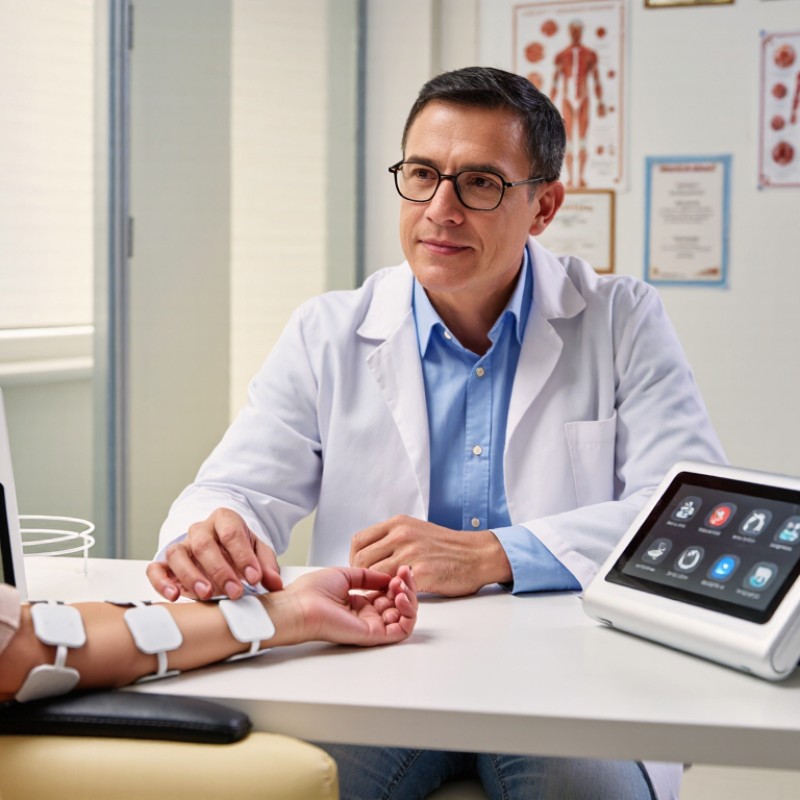
Real-world details often reveal more than promotional claims. Can a therapist adjust stimulation while supporting a patient’s limb? Do electrodes remain attached during movement? Is the output consistent after repeated charging cycles? These questions deserve written answers from manufacturers. Independent testing, published clinical evidence, regulatory clearance, and transparent contraindication guidance also matter. So does staff training.

Not every expensive device is better.

A cautious buyer should compare intended use with actual patient needs. Implantable electronic devices, impaired sensation, fragile skin, pregnancy considerations, and acute medical conditions may require professional assessment. The final choice should involve qualified clinicians, not online ratings alone. Even experts can overlook workflow problems. That is the uncomfortable part. A technically advanced device may fail if patients dislike the sensation, therapists lack confidence, or maintenance is ignored. This guide examines how to choose wisely, while acknowledging that evidence evolves and no single device suits every setting.
How to Choose Electrotherapy Stimulation Devices in 2026?

Classify TENS (1–200 Hz), NMES (20–50 Hz), and FES by Intended Use

How to Choose Electrotherapy Stimulation Devices in 2026?

TENS usually targets pain relief through sensory nerve stimulation. Its frequency range may span 1–200 Hz. Lower settings can feel slower and deeper, while higher settings may feel sharper or more continuous. Comfort matters. A technically suitable setting can still fail if the user dislikes the sensation.

NMES is designed to activate muscles and create visible contractions. Common settings fall between 20–50 Hz. Therapists may use it during muscle retraining, weakness recovery, or exercise support. Pulse width, intensity, electrode placement, and contraction timing also influence results. Frequency alone is not enough. In practice, poor electrode placement can make a good device seem ineffective.

FES applies stimulation in coordination with a functional movement, such as lifting the foot during walking. It often uses NMES principles, but timing becomes the defining feature. The device may need a sensor, trigger, or carefully adjusted program. The boundary between NMES and FES is not perfectly clean. That is worth remembering.

A qualified clinician should assess the person’s condition, skin response, sensation, and implanted medical devices before use. Users should follow the device instructions and stop if pain, burns, unusual weakness, or persistent irritation appears. Some settings may require several adjustments before they feel right. That is normal, not a sign of failure.

Verify IEC 60601-1, ISO 10993, CE Marking, and FDA 510(k) Documentation

When choosing an electrotherapy stimulation device in 2026, begin with its exact intended use. A polished website is not enough. Ask the supplier for the current IEC 60601-1 test report, certificate, and device model number. This standard addresses essential electrical safety and basic performance. The model on the report should match the model in your quotation. Small differences matter.

Skin-contact electrodes and leads require closer review. ISO 10993 documentation should explain the biological evaluation, contact duration, and tested materials. Do not accept a generic statement saying “biocompatible.” Ask for the relevant reports, such as irritation or sensitization testing, when applicable. Details matter. A practical check includes inspecting labeling, warnings, cleaning instructions, and the supplied power adapter.

For European sales, verify the CE marking, EU Declaration of Conformity, applicable regulations, and the notified body details when required. CE marking shows a conformity claim; it is not a universal quality award. For the United States, confirm whether FDA 510(k) clearance applies to the device’s classification and intended use. Search the FDA database using the exact manufacturer, model, and clearance number. A similar-looking device may have a different indication. My review checklist is not flawless, especially when documents use unfamiliar regulatory language. I would request translated records and question unexplained gaps. Ask for evidence, not promises.

How to Choose Electrotherapy Stimulation Devices in 2026? - Verify IEC 60601-1, ISO 10993, CE Marking, and FDA 510(k) Documentation

Evaluation Dimension What It Verifies Documentation to Request Key Checks for Buyers 2026 Selection Guidance
Intended Use and Device Classification Defines whether the device is intended for pain relief, muscle stimulation, rehabilitation, diagnosis, or another medical purpose. Intended-use statement, indications for use, contraindications, user manual, and regional classification rationale. Confirm that the intended use matches the claims, operating modes, patient population, and treatment settings. Do not rely on the product name alone; regulatory obligations depend on intended use and risk.
IEC 60601-1 Electrical Safety Addresses basic safety and essential performance of medical electrical equipment, including protection against electric shock, excessive temperatures, mechanical hazards, and abnormal operation. Test report or certificate showing the applicable edition of IEC 60601-1 and the tested device configuration. Check model numbers, power supply, accessories, applied parts, test laboratory, report date, and any limitations or deviations. A generic laboratory statement is insufficient if it does not identify the exact device and configuration being purchased.
IEC 60601-1-2 Electromagnetic Compatibility Evaluates immunity to electromagnetic disturbances and emissions that could affect the device or nearby equipment. EMC test report referencing IEC 60601-1-2 and the applicable environment, such as professional healthcare or home healthcare. Verify pass results, operating modes tested, cable and electrode configurations, and warnings concerning radio-frequency equipment. Give preference to documentation covering the actual accessories and intended use environment.
ISO 10993 Biological Evaluation Assesses biological safety of materials that contact the patient, based on the type, duration, and nature of contact. Biological Evaluation Plan or Report, material specifications, supplier declarations, and applicable biocompatibility test reports. Check electrode gels, adhesive pads, cables, housings, and any patient-contacting components. Confirm the contact duration category. ISO 10993 is risk-based; a complete biological evaluation may use testing, scientific rationale, chemical assessment, or a combination.
CE Marking Under EU MDR 2017/745 Indicates that the device has completed the applicable European conformity assessment and meets relevant EU medical-device requirements. EU Declaration of Conformity, CE certificate when a notified-body assessment is required, technical documentation summary, and notified-body details if applicable. Confirm the legal manufacturer, device or model scope, applicable regulation, certificate validity, CE symbol, and four-digit notified-body number where required. CE marking is not a universal quality award. Verify that the marking covers the exact device, intended purpose, and current regulatory route.
FDA 510(k) Documentation For applicable U.S. devices, demonstrates substantial equivalence to a legally marketed predicate device before commercial distribution. FDA 510(k) number, FDA decision letter, cleared indications for use, substantial-equivalence summary, and any relevant special controls. Search the FDA public database and match the cleared model, indications, stimulation parameters, accessories, and labeling to the offered device. A 510(k) clearance is not the same as FDA approval, and not every medical device requires a 510(k).
Output and Stimulation Parameters Shows whether the device can deliver the required waveform, pulse width, frequency, amplitude, channels, and treatment duration. Technical specification sheet, electrical output verification, calibration information, and user-program settings. Compare stated output with the clinical protocol. Check load conditions, amplitude units, tolerance ranges, ramp functions, and maximum treatment time. Select based on documented performance rather than the number of programs or marketing claims.
Risk Management and Essential Performance Demonstrates that hazards have been identified, evaluated, controlled, and monitored throughout the device life cycle. ISO 14971 risk-management summary, hazard analysis, residual-risk evaluation, and verification of safety controls. Look for controls covering incorrect electrode placement, excessive current, skin irritation, battery failure, software faults, and unintended stimulation. Risk controls should be consistent with the warnings, alarms, labeling, and operating instructions.
Clinical Evidence and Performance Claims Supports whether the device performs as claimed for the stated patient population and treatment purpose. Clinical evaluation report, clinical investigation documentation when applicable, literature review, and performance-test results. Check whether evidence supports the exact indication rather than a broader or different use. Treat unsupported claims such as guaranteed pain elimination or universal therapeutic results as a purchasing red flag.
Labeling, Contraindications, and Instructions Ensures users receive clear information for safe setup, operation, cleaning, storage, and treatment limitations. Current instructions for use, labels, warnings, contraindications, electrode-placement diagrams, cleaning instructions, and language versions. Confirm warnings for implanted electronic devices, impaired sensation, damaged skin, pregnancy-related use, seizure risk, and treatment near the chest or head where applicable. The manual should clearly distinguish professional-use requirements from home-use instructions.
Traceability and Post-Market Support Supports identification of affected units, corrective actions, maintenance, complaints handling, and field safety updates. Serial-number or lot-number system, complaint procedure, recall history, service schedule, spare-parts information, and warranty terms. Verify that replacement electrodes and batteries are available and that service records can be maintained. Prioritize suppliers that provide controlled document updates and a clear process for reporting adverse events.
Overall Purchasing Decision Combines regulatory conformity, electrical safety, biological safety, clinical suitability, usability, and lifecycle support. Completed supplier document package and a written conformity checklist for the exact model and accessories. Approve only when critical documents are current, consistent, independently verifiable, and aligned with the intended market. Use a risk-based review: missing regulatory evidence should outweigh attractive price, features, or program counts.

Note: Regulatory requirements vary by jurisdiction, device classification, intended use, and patient-contact profile. Always verify current documents for the exact model and configuration before purchase.

Compare Output Specifications: 1–100 mA, 50–400 μs Pulse Width, and Frequency

How to Choose Electrotherapy Stimulation Devices in 2026?

Output specifications deserve closer attention than attractive screens or preset programs. The WHO reported that low back pain affected about 619 million people in 2020, showing the scale of rehabilitation needs. However, a higher output does not automatically mean better treatment. A device rated from 1–100 mA offers broad adjustment, yet useful intensity depends on electrode size, skin resistance, placement, and comfort. Pulse width matters too. At 50 mA and 400 μs, each pulse delivers approximately 20 μC of charge. That can feel very different from 50 mA at 50 μs.

Frequency shapes the experience. Lower frequencies may create separate muscle contractions, while higher frequencies can feel smoother and more continuous. Do not judge frequency alone. Check whether the device allows fine steps, stable current delivery, and independent channel control. IEC 60601-2-10 addresses safety requirements for nerve and muscle stimulators, while FDA neurological-device guidance stresses documented performance and risk controls. These standards support careful selection, not automatic clinical success. The range looks precise. Human response is not.

Tips: Compare current, pulse width, and frequency together. Ask for measured output data, not only maximum ratings. In practical testing, begin with a low setting and record skin sensation, contraction quality, and recovery afterward. I would avoid assuming that 100 mA is superior; that shortcut is tempting, but often wrong. A qualified clinician should review use when pain, numbness, implanted electronics, or unexplained weakness is present.

Evaluate Clinical Evidence, Contraindications, Skin Safety, and Adverse-Event Data

Choosing an electrotherapy stimulation device in 2026 requires more than checking waveform settings. Clinical evidence should match the intended use, not merely a laboratory claim. A Cochrane review by Gibson and colleagues included 11 studies with 919 participants, yet rated evidence for TENS in chronic pain as very low certainty. Results varied with electrode placement, treatment duration, and pain type. That uncertainty matters. A comfortable session is not proof of clinical benefit.

Review contraindications before testing output levels. Patients with pacemakers, implanted defibrillators, epilepsy, pregnancy, or unexplained pain need qualified clinical advice. Avoid the front of the neck, across the chest, damaged skin, and areas with reduced sensation. Skin safety also deserves a close inspection. IEC 60601-2-10 addresses nerve and muscle stimulators, while ISO 10993-23 evaluates irritation. Check the electrode after five minutes. Redness that persists, blistering, burning, or numbness means stopping immediately. Adverse-event data require careful reading: FDA’s MAUDE database collects reports, but it cannot calculate true incidence because exposure denominators are missing. I would not treat a low report count as proof of safety. Real-world reporting remains incomplete. Testing on a small, intact skin area first is practical, although not a substitute for clinical validation.

Score Electrode Life, Battery Capacity, Warranty Terms, and Total Cost of Ownership

Choosing an electrotherapy stimulation device in 2026 requires more than comparing intensity settings. Electrode life, battery capacity, warranty terms, and ownership costs often decide whether a device remains practical. I once overvalued a low purchase price and ignored replacement electrode costs. That mistake became expensive.

Check how many sessions each electrode set can reasonably support. Adhesive quality may decline after repeated use, especially with sweaty skin or poor storage. A device used five times weekly needs durable pads and easily available replacements. Ask for clear storage guidance and measurable electrode-life estimates. Vague promises deserve caution.

Battery capacity should match your routine. A battery lasting ten sessions may suit occasional users, but frequent users need longer endurance. USB charging is convenient, yet charging time and battery replacement options matter. Record the warranty length, coverage exclusions, repair process, and shipping responsibilities. A two-year warranty sounds useful until consumables, cables, or battery faults are excluded. Read the small print.

Calculate total cost of ownership over two years. Include the device, electrodes, charging accessories, delivery, and possible service fees. Keep the calculation simple. Then compare realistic usage, not the best-case estimate. Independent clinical guidance and transparent technical documentation are stronger evidence than dramatic advertising claims. Confirm the device suits your intended use and follow qualified professional advice when necessary. My own review process still has gaps, especially when long-term battery aging is unclear. That uncertainty should be recorded, not hidden.

FAQS

What is TENS generally used for?

TENS usually supports pain relief through sensory nerve stimulation. Its frequency may range from 1–200 Hz. Lower settings can feel slower and deeper. Higher settings may feel sharper or more continuous. Comfort matters.

How does NMES differ from TENS?

NMES aims to activate muscles and produce visible contractions. Common frequencies range from 20–50 Hz. Therapists may use it for muscle retraining, weakness recovery, or exercise support. Frequency alone does not determine performance.

What makes FES different from NMES?

FES coordinates stimulation with a functional movement, such as lifting the foot while walking. Timing is central. A sensor, trigger, or carefully adjusted program may be required. The boundary is not perfectly clean.

Which device should someone choose for regular home sessions?

Choose according to the intended use and professional guidance. Check sensation, skin condition, electrode placement, and any implanted medical devices. A colorful screen cannot replace suitable settings. My own selection process still misses some long-term details.

Why does electrode placement matter?

Placement affects comfort, contraction quality, and treatment consistency. Poor placement can make an effective device seem ineffective. Sweaty skin may reduce adhesive performance. Follow the instructions carefully.

How long should stimulation electrodes last?

Electrode life depends on session frequency, skin condition, storage, and adhesive quality. Someone using a device five times weekly needs durable pads. Request realistic session estimates and clear replacement guidance. Vague promises deserve caution.

What battery features should buyers compare?

Match battery capacity with your routine. A battery lasting ten sessions may suit occasional use. Frequent users may need longer endurance. Also check charging time and battery replacement options. Convenient charging is not everything.

How can total ownership cost be estimated?

Add the device, electrodes, charging accessories, delivery, and possible service fees. Compare costs across two years. Use realistic usage, not the best-case estimate. Read warranty exclusions. That uncertainty remains.

When should someone stop using an electrotherapy device?

Stop if pain, burns, unusual weakness, or persistent skin irritation appears. Seek qualified advice when symptoms continue. Follow the device instructions. Several adjustments may be normal, but discomfort should not be ignored.

Conclusion

Choosing the right Electrotherapy Stimulation device in 2026 requires matching the technology to its intended use. TENS, typically operating from 1–200 Hz, is commonly assessed for sensory stimulation and pain-management applications, while NMES, often using 20–50 Hz, is designed to support muscle activation. FES should be evaluated according to its ability to coordinate stimulation with functional movement. Buyers should also verify IEC 60601-1 electrical safety, ISO 10993 biocompatibility, CE marking, and appropriate FDA 510(k) documentation where applicable.

A thorough comparison should include output current between 1–100 mA, pulse widths of 50–400 μs, adjustable frequency, and the device’s control accuracy. Clinical evidence, contraindications, skin compatibility, and adverse-event data are essential for responsible selection. Finally, consider electrode durability, battery capacity, warranty coverage, maintenance requirements, and total cost of ownership rather than focusing only on the purchase price. A balanced review of performance, safety, documentation, and long-term value can support a more informed decision.


Liam

Liam

Liam is a dedicated marketing professional with a profound expertise in the industry, where he excels at highlighting the unique advantages of our core products. With a keen understanding of market trends and consumer needs, Liam frequently updates our company’s professional blog, providing......