How to Use a TENS Machine for Physiotherapy? This guide examines safe, practical Tens Machine Physiotherapy for people managing pain during rehabilitation. A TENS unit sends mild electrical impulses through adhesive pads placed on the skin. Users may feel rhythmic tingling, gentle tapping, or brief buzzing near the treatment area.
The need for accessible pain management is substantial. The World Health Organization reported that low back pain affected approximately 619 million people worldwide in 2020. It also projects nearly 843 million cases by 2050. However, TENS is not a universal solution. A Cochrane review found that evidence for TENS and chronic pain remains uncertain, partly because treatment settings and study quality vary. That limitation matters.
Clinical judgment comes first.
Dr Tim Watson, a recognised electrotherapy educator, has described TENS as “a treatment for pain relief, not a cure for the cause of the pain.” This principle supports responsible Tens Machine Physiotherapy. A physiotherapist should assess the pain source, skin condition, sensation, movement pattern, and treatment goals before recommending use. Pad placement should follow professional guidance, not guesswork from a quick online video. Patients should also monitor redness, discomfort, dizziness, or worsening symptoms.
Small details change the experience. Clean, dry skin improves pad contact. A low setting may feel more comfortable during the first session. The machine should never replace strengthening, mobility work, education, or medical assessment when symptoms persist. Some instructions may feel too general. That is a weakness worth acknowledging. Effective physiotherapy often requires adjustment, patience, and honest review.
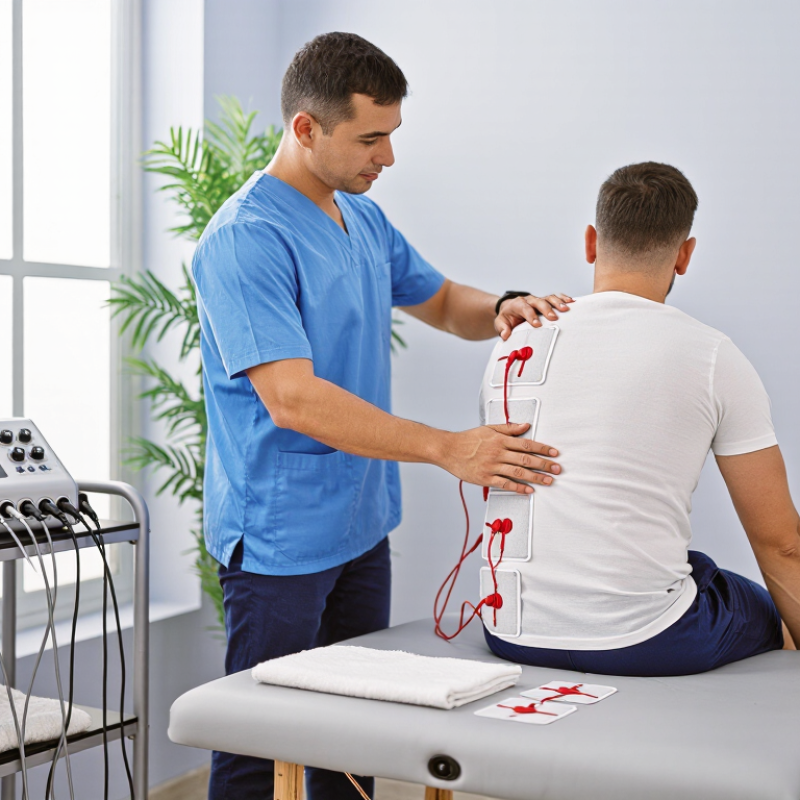
A TENS machine uses mild electrical pulses to stimulate nerves through adhesive electrodes on the skin. This may reduce pain signals and support movement during physiotherapy. It does not repair injured tissue or replace exercise. The World Health Organization reported that low back pain affected 619 million people worldwide in 2020, showing why safe, supportive pain strategies matter.
In clinical practice, TENS can make stretching, walking, or strengthening more tolerable. A physiotherapist should choose electrode placement, intensity, and treatment time for the individual. Evidence remains mixed. Cochrane reviews often rate TENS evidence as low or very low certainty, while NICE guideline NG193 advises against TENS for chronic primary pain. That difference matters. TENS may help some patients, but it is not a universal solution. I would reassess progress rather than assume the device is working.
Tips: Place electrodes on clean, intact skin near the painful area, not directly over wounds. Start with a comfortable intensity, then increase gradually without causing sharp discomfort. Do not use TENS without medical advice if you have a pacemaker, seizure disorder, reduced sensation, or pregnancy-related concerns. Keep a brief pain and activity diary. It can reveal whether TENS supports real movement, not just temporary relief.
Choosing TENS settings should begin with the treatment goal and your clinician’s advice. For general pain relief, a frequency of 80–120 Hz and a pulse width of 50–100 microseconds are commonly used. Increase the intensity slowly until you feel a strong, comfortable tingling. It should not feel sharp or painful. Muscle twitching is usually unnecessary with this setting. Lower-frequency programs may create gentle contractions, but they require more careful guidance. The first setting is rarely perfect. Pain response can change from one session to another.
Place electrodes on clean, dry skin around the painful area, rather than directly over a wound or irritated patch. Keep them several centimetres apart, and adjust their position to surround the discomfort. Avoid the front of the neck, head, broken skin, and a path that crosses the chest. Do not place pads over areas with poor sensation, because excessive intensity may go unnoticed. Keep the leads secure, but avoid tight placement. Small changes matter.
Stop if you notice burning, dizziness, unusual heart symptoms, or worsening pain. Do not use TENS while driving, bathing, or sleeping. People with implanted electronic devices, reduced sensation, epilepsy, or pregnancy should seek professional advice before use. A physiotherapist can check electrode placement and help distinguish safe tingling from irritation. Comfort is useful evidence, but it is not proof that the treatment is appropriate.
Before a TENS treatment session, tell your physiotherapist about your pain, medications, and medical history. Mention implanted electronic devices, pregnancy, epilepsy, or reduced skin sensation. These details can change the treatment plan. The World Health Organization estimates that 1.71 billion people live with musculoskeletal conditions worldwide. Pain is common, but its cause is not always simple. A TENS machine may ease symptoms, yet it does not repair every underlying problem.
Wear loose clothing and arrive with clean, dry skin. Remove creams, oils, and sweat from the treatment area. Do not place electrodes over broken skin, irritated rashes, the front of your neck, or directly across your chest.
Your physiotherapist should check the electrode position and begin with a comfortable intensity. It should feel strong and noticeable, never sharp or painful.
Evidence remains mixed. A Cochrane review found that TENS studies often used small samples and different treatment methods, limiting firm conclusions. That uncertainty matters.
Tips: Bring a short pain diary. Record your pain level, movement limits, sleep quality, and previous treatments. During the session, describe tingling, burning, dizziness, or skin discomfort immediately. Do not silently tolerate an unpleasant setting. Afterward, check the skin for redness and note how long any relief lasts. My practical mistake was expecting instant improvement; sometimes the useful change appears during movement later. Reassessment is still needed.
A TENS machine delivers mild electrical pulses through adhesive pads. During physiotherapy, use it only after a qualified clinician checks your condition and treatment goals. Explain your medical history, current medicines, skin sensitivity, and any implanted electronic device.
Clean and dry the skin before attaching the pads. Place them around the painful area, not directly over an open wound. Turn the intensity to zero before switching the unit on. Increase it slowly until you feel a strong, comfortable tingling. It should not feel sharp or painful. Keep the leads secure and check the skin during treatment.
Never use TENS while driving, sleeping, bathing, or operating machinery. Remove the pads before adjusting their position. Avoid sharing adhesive pads, since skin bacteria can spread. I have found that people often increase the intensity too quickly, hoping for faster relief. That usually adds discomfort, not better therapy. Treatment length should follow your clinician’s instructions, because longer sessions are not automatically safer. Inspect the skin afterward. Mild temporary redness may occur, but swelling, blistering, or lasting irritation needs medical advice.
A TENS machine can support physiotherapy, but its value should be measured beyond temporary tingling. Before treatment, record pain from 0 to 10, walking distance, sleep quality, and one practical goal. For example, “stand for 15 minutes while cooking.” Note the electrode position, session length, intensity, and skin response. Keep the settings comfortable, not painfully strong.
Review the log after several sessions, not after one dramatic afternoon. A clinically useful change may include easier movement, longer sleep, or reduced reliance on other comfort strategies. NICE guideline NG193 advises against TENS for chronic primary pain because reliable evidence remains limited. A Cochrane review also reported very low-certainty evidence and substantial variation between studies. These findings do not prove that TENS never helps. They show why personal results need careful checking.
Adjust only one factor at a time, with guidance from a physiotherapist. You might change electrode placement, treatment duration, or session frequency. Avoid increasing intensity simply because the first session felt weak. Stop if burning, persistent redness, dizziness, or worsening pain appears. Then seek professional advice. My own practical mistake would be judging success by sensation alone. A strong pulse can feel impressive while function remains unchanged. Recheck the same goal after one week, and discontinue the approach if meaningful progress is absent.
| Session | Treatment Area | Pain Before (0–10) |
Pulse Frequency (Hz) |
Pulse Width (µs) |
Intensity | Duration (minutes) |
Pain After (0–10) |
Relief After (%) |
Skin Response | Next-Treatment Adjustment |
|---|---|---|---|---|---|---|---|---|---|---|
| 1 | Lower back | 7 | 80 | 200 | Strong but comfortable | 30 | 5 | 29% | Normal | Repeat settings; confirm electrode placement. |
| 2 | Lower back | 6 | 80 | 200 | Strong but comfortable | 30 | 4 | 33% | Normal | Maintain settings and record relief duration. |
| 3 | Lower back | 6 | 80 | 200 | Strong but comfortable | 30 | 3 | 50% | Normal | Continue; combine with prescribed movement exercises. |
| 4 | Lower back | 5 | 80 | 200 | Moderate to strong | 30 | 3 | 40% | Mild redness, resolved within 20 minutes | Inspect skin before use; rotate electrode position slightly. |
| 5 | Lower back | 5 | 80 | 200 | Moderate | 25 | 3 | 40% | Normal | Use shorter duration because relief remained stable. |
| 6 | Lower back | 6 | 80 | 200 | Moderate to strong | 25 | 4 | 33% | Normal | Review activity and posture factors; do not automatically increase intensity. |
| 7 | Lower back | 5 | 80 | 200 | Strong but comfortable | 25 | 2 | 60% | Normal | Maintain settings and reassess functional improvement. |
| 8 | Lower back | 4 | 80 | 200 | Moderate to strong | 25 | 2 | 50% | Normal | Consider reducing frequency if function remains improved. |
| 9 | Lower back | 4 | 80 | 200 | Comfortable sensory tingling | 20 | 2 | 50% | Normal | Continue only when helpful; document mobility and daily-activity response. |
| 10 | Lower back | 3 | 80 | 200 | Comfortable sensory tingling | 20 | 1 | 67% | Normal | Discuss tapering use and continue the broader rehabilitation plan. |
It sends mild electrical pulses through skin electrodes. This may reduce pain signals and make stretching, walking, or strengthening easier. Not a cure.
No. TENS may support comfort, but it does not repair injured tissue. Exercise and professional treatment remain important.
Place them on clean, intact skin near the painful area. Avoid wounds, broken skin, and irritated patches. Placement should follow physiotherapist advice.
Start with a comfortable intensity. Increase it gradually if needed, without sharp discomfort. A stronger pulse is not automatically better.
Ask a healthcare professional if you have a pacemaker, seizure disorder, reduced sensation, or pregnancy-related concerns. Stop if unsure.
Record pain from 0 to 10, walking distance, sleep quality, and one practical goal. For example, stand for 15 minutes while cooking.
Review several sessions rather than one unusual afternoon. Check the same goal after about one week. Keep it simple.
Stop if burning, persistent redness, dizziness, or worsening pain appears. Seek professional advice before trying again.
No. Research findings remain mixed, with some evidence considered uncertain. It may help certain people, but it is not universal.
I might confuse strong tingling with real improvement. Function matters more. If movement does not improve, reassess the approach.
Tens Machine Physiotherapy uses mild electrical impulses to stimulate nerves, helping manage pain and support muscle relaxation during a physiotherapy program. Before treatment, a therapist should assess the condition and select suitable settings, including pulse intensity, frequency, and treatment duration. Electrode placement is equally important: pads should be positioned on clean, intact skin around the painful or treated area, while avoiding wounds, irritated skin, the front of the neck, and other unsuitable locations.
To prepare, check the device, clean and dry the skin, and begin with a low intensity that can be increased gradually to a comfortable tingling sensation. The user should remain relaxed and stop immediately if there is burning, sharp pain, dizziness, or unusual discomfort. TENS should not be used without professional advice by people with certain implanted electronic devices or specific medical conditions. After each session, record pain levels, mobility, comfort, and any skin reaction. This information helps the therapist adjust future settings, electrode positions, and session length for safer, more effective rehabilitation.

Royalpeak